


Signal-Talk Analysis · US Govt · Intel · 10% Equity/ India · Sept. 2025; ST -002 (read time: 3 mins)
Signal vs Noise in Tech Sovereignty & Industrial Policy
A quiet but consequential shift: when the state moves from regulator to shareholder, the rules of capitalism begin to change.

SIGNAL
What actually matters?

NOISE
What distracts or distorts?
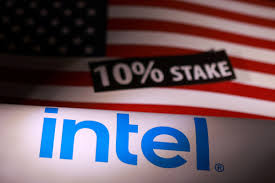
The US government takes a 10% equity stake in Intel.
This marks a structural shift in how critical technologies are governed.
Semiconductors are now treated as strategic national assets and not as market commodities.
State participation signals long-term commitment beyond subsidies and incentives:
This move possibly reflects a broader transition toward techno-industrial policy in advanced economies.
Media spin: “socialist nationalization” vs. “patriotic rescue.”
Investor buzz: short-term stock bounce, political grandstanding.
Election angle: framing it as jobs + votes rather than national security.
Framing the move as a one-off rescue or short-term industrial stimulus.
Reducing the narrative to Intel’s operational or financial performance alone.
Treating this as an “exception” rather than part of a global pattern.
Political point-scoring around government overreach vs free markets.

System Lens
This is not about Intel alone. It is about how states redesign markets when strategic systems fail to self-correct.
- System trigger: Market underinvestment in advanced chip manufacturing despite rising strategic importance.
- Feedback breakdown: Globalized supply chains optimized for efficiency, not resilience.
- System response: State shifts from rule-setter to capital participant.
- Emergent property: Capitalism with national-security guardrails — neither fully free nor fully state-run.

Signal-to-Noise Ratio (SNR)
Editorial score:
6.8
/ 10
Low 1-3
Medium 4-6
High 7-9
Perfect 10 (no Noise)
This is a near high-signal event because it alters system design, not just policy settings. Equity participation creates long-term alignment — and long-term consequences.
National Security and Geopolitics take precedence over Technology and Industry Policy

Comparative Signal-to-Noise (SNR) Scores
How different actors frame the same issue—measured using the same Signal-to-Noise logic.
Editorial (Signal-Talk)
6.8
System-aware, geopolitics-heavy, evidence-thin
Gen AI-4 (Avg. score) #
7.2
Pattern recognition, balanced framing, moderate clarity
Reader’s Pulse (Poll)
[weighted_SNR_score id=”1205″]
Public pulse is lower; more noise than clarity in how this lands. In sum, weaker perceived clarity and confidence
# Gen AI-4 is average score of 4 LLM’s – Chat GPT, Grok, Gemini and Perplexity
SNR scores are on scale of 1-10 (1; System depleting and 10 System forming)
“When governments start owning pieces of the infrastructure that powers the digital economy, neutrality becomes structurally impossible.”
How clear does the core issue feel to you after reading this episode of Signal-Talk?
Cast your vote and see how your score compare with Community and Gen AI scores.
CAST YOUR VOTE
Rate the signal, not the sentiment.
Your take on: US Government Takes 10% Equity in Intel?
[weighted_SNR_score id=”1205″]

Signal-Talk Take / Behind the Signal Editorial interpretation based on system behavior, not sentiment
For decades, the dominant belief was clear: governments regulate, markets innovate.
That boundary is now dissolving.
The US government’s equity stake in Intel signals a world where strategic failure is no longer tolerated as market correction. Instead, the state steps in — not as a temporary firefighter, but as a co-owner of the system itself.
This is the rise of strategic techno-capitalism:
markets still operate, but only within guardrails defined by national interest, resilience, and power projection.
The real signal is not the percentage owned.
It is the precedent set.
In sum, this Signal is not about whether the move is “good” or “bad.”
It is about recognizing that the operating system of global capitalism is being quietly rewritten.
Signal-Talk: Making sense of what really matters
One Signal at a Time.
Signal-Talk Episode: ST 002 | Technology; Government, Business, Power Play